
by Ruth Leonard, Chair of Association of Volunteer Managers (AVM)
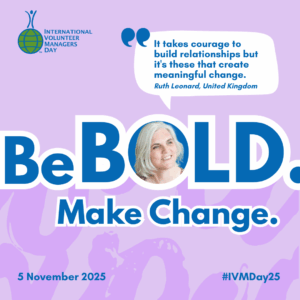
This year’s International Volunteer Managers Day theme is “Be Bold, Make Change”, which is a great challenge for us to think differently about how we lead, support, and champion volunteering.
For me the key element of involving volunteers is developing reciprocal relationships. And this takes courage. It’s about creating spaces where people feel valued, trusted, and able to use their agency to make a difference. It is you as volunteer managers who develop the connections — between volunteers, communities, and organisations — which drives real change.
So, being bold means asking: “What needs to change in how we involve volunteers?”
I’ve long highlighted the need to move from simply “managing” volunteers to “enabling” them. Involving volunteers is increasingly less about fitting people into pre-set roles — and more about creating the environment for them to contribute their skills and ideas to develop the right solutions which are needed. The role of a volunteer manager is to manage the process which allows people to flourish. As I recently spoke about with Tobi Johnson at TeamKinetic’s Conference – involving volunteers is a lot like gardening.
Being bold also means advocating for the value of our profession. Volunteer management is skilled, strategic work that requires empathy, innovation, and leadership. At a time when there is concern about an apparent decline in volunteer numbers, organisations need to invest in those roles which make volunteering thrive and enable those who lead volunteers to develop the confidence to build and maintain relationships, share power and experiment – because there is reported evidence that organisations which are working in this way are actually seeing an increase in volunteers.
The world of volunteering is changing. People are less likely to want to give time in a traditional way, although of course some people might. We need to be bold and make change by designing volunteer involvement that reflects this reality: open, flexible, and inclusive with a range of available opportunities. That means reducing unnecessary bureaucracy and finding ways to make volunteering accessible to everyone, whatever their background or circumstance. This then means being bold in influencing stakeholders to allow us to make the changes.
Relationships are the foundation of effective volunteer involvement. When we take the time to build trust and listen, we can co-create opportunities that work for everyone. Volunteers aren’t just there to fill roles — they bring perspectives, insights, and energy that can shape how organisations evolve. As has been said elsewhere; they aren’t our volunteers, we are their organisations. And this is the essential role of volunteer managers – to build the relationships which enable this connection and mattering to happen. It takes courage to build those relationships — but it’s through them that real, lasting change happens.
Every volunteer is different. Some are driven by a cause, others by community, connection, or personal growth. Being bold means designing opportunities that meet these diverse motivations and celebrating the richness they bring. When we understand what drives people, we can build deeper relationships and deliver greater impact together.
Across the AVM membership, I hear countless examples of bold, relationship-driven change: processes reimagined with volunteers at the centre; systems redesigned to reduce barriers; and volunteer managers standing up for the value of volunteering every single day.
So today, I want to celebrate and thank you — the changemakers who connect, support, and inspire others. The ones who see potential in every person and possibility in every challenge.
Let’s continue to be bold. Let’s continue to build relationships. And together, let’s keep making the change that our communities — and our world — need.
Happy International Volunteer Managers Day!

Great post Ruth. Completely agree with all you say. We need to keep being Bold and not afraid to challenge ourselves and our organisations about the role’s those who donate their time and talents can play in their organisation.