




The elephant in the room
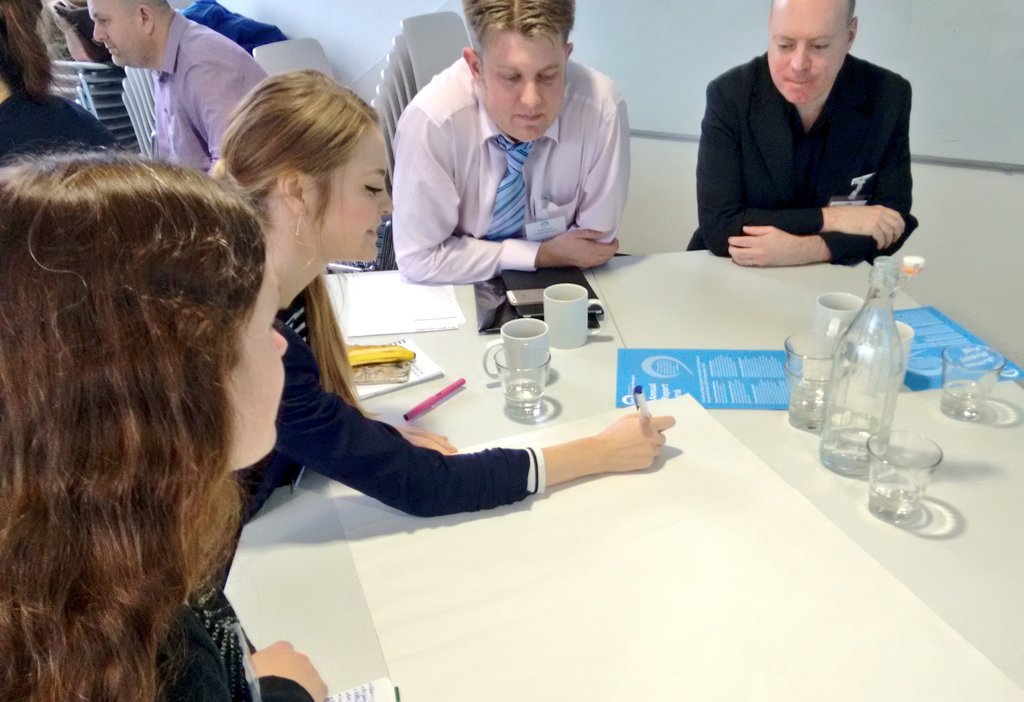
I happen to think that Volunteer Management is a profession. A profession in its infancy perhaps but a profession none the less. But then I would say that because I'm biased! But actually, am I right? Is there a big elephant in the room that we just don't want to see?
Is volunteer management a profession? Something that you need a certain set of skills that takes years of experience to perfect, that only a certain type of person could do? Or is it something that actually, anyone with a basic understanding of people skills (or even actually none!) can do?
Surely if we were a profession AVM, or something like it, would have been set up a long time ago and be akin to the CIPD or Institute of Fundraising by now?
Wouldn't a lot more CEOs have a volunteer management background as opposed to a fundraising or campaigning background? Wouldn't volunteers mainly be managed by people who know how to manage and support volunteers rather than junior members of organisations with little or no management experience? Surely organisations would ensure that volunteer management is properly resourced?
I started a new job towards the end of last year. In my new role, I've had the privilege to meet a number of organisations who involve volunteers in their projects. Without these volunteers they wouldn't be in existence. Google Haringey Shed, Cathja, Kensington & Chelsea Mental Health Carers and you can see the amazing work these organisations do.
These people transform lives. They are the embodiment of the spirit of volunteering. I bang on that the reason why we involve volunteers is to help our organisations do more. (I think my board are sick of hearing me say that!).

Student Volunteers: A National Profile
To celebrate Student Volunteering Week 2010 (22-28 February), Volunteering England commissioned a piece of research to increase knowledge and information about students volunteering in the UK. This analysis of student volunteering was carried out with respondents to wave two of the Futuretrack survey. Respondents were full-time students at UK Higher Education Institutions enrolled on an undergraduate degree programme. Respondents were surveyed during summer and autumn 2007 to record their experiences of their first year at university or college. Key findings include:
- 15.3% of undergraduates reported that they volunteered with a charity in their first year of studies;
- Volunteering rates were highest among students studying medicine/dentistry and social sciences;
- Students at higher ranking universities (ranked by entry tariff points) reported the highest volunteering rates;
- Volunteering rates were higher among some minority groups, including most ethnic minority students, students with a disability and those with caring responsibilities;
- Students who volunteer were more likely to take part in other extracurricular activities (both on and off campus);
- The most common reason for volunteering is to help someone or the community.
You can download a copy of the research bulletin at: http://www.volunteering.org.uk/WhatWeDo/Student+Volunteering/

The Queen's Award for Voluntary Service
The Queen's Award for Voluntary Service, the MBE for volunteer groups, was created in 2002 to recognise the outstanding contributions made by voluntary organisations in local communities across the UK.
To date, 750 groups have received the Award from Her Majesty; however, we are continually striving to recognise more of those who are operating to the highest standard. Previously, groups may not have been nominated because they, or those in a position to nominate them, are unaware of their eligibility for this prestigious Honour.
As part of our work to reach people who know such groups in their area, I write to request your support in sharing information about The Queen's Award for Voluntary Service with other members of your organisation - at a national and/or regional level. In doing so, we would like to encourage nominations from members of the public, someone who has benefited from the group or indeed someone in your organisation who has recognised outstanding voluntary work.
For further information about the Award, please go to www.direct.gov.uk/thequeensawardforvoluntaryservice
Martyn Lewis CBE,
Chairman of The Queen's Award for Voluntary Service committee

Is the web changing the way we give?
I've summarised my thoughts so far on thinking about how the concept of the gift economy can help us understand giving activities, such as volunteering and participation, in the context of the social web. I've done this ahead of the Volunteering Counts Conference March 1st-2nd in Manchester organised by the Institute of Volunteering Research where I'll be presenting.
Abstract
The rise of social media and digital networks is contributing to the return to prominence of the gift economy. As the web has enabled social networks and online communities to grow, so values such as sharing, openness and collaboration associated with the gift economy, are increasingly influencing the relationships and connections between us. From business strategies through to public policy, giving relationships are seen as offering credible and valuable contributions.
This revolution in values offers volunteerism and other forms of giving such as participation, civic engagement and professional-amateurism, an opportunity to play an even greater role in a ever more networked Britain.
Volunteering Counts Conference 2010
Volunteering Counts: landmark conference on defining, measuring and valuing volunteering
1st and 2nd March, Manchester
The Institute for Volunteering Research is helping to organise a research conference on volunteering. 'Volunteering Counts' will explore how we measure, record and count volunteers and volunteering.
Through an exciting series of plenary sessions, roundtable discussions, key note presentations, professional development workshops and paper sessions, Volunteering Counts will explore:
* How can we effectively capture the value and impact of volunteering?
* What are the methodological issues and challenges of measuring and counting volunteers?
* How important is the way we define and conceptualise volunteering?
Confirmed speakers and panelists include:
* Eilís Lawlor, New Economics Foundation
* Wendy Osborne, Volunteer Development Agency, NI
* John Ramsey, Age Concern
* Colin Rochester, Roehampton University
* Duncan Scott, Third Sector Research Centre
* George Thomson, Volunteer Development Scotland
Volunteering Counts will be of interest to a wide audience, including researchers, practitioners and policy makers. The full conference programme is available at www.ivr.org.uk/events, where you can book your place. This two-day event is being organised by the UK Volunteering Forum Research Group, a consortium of researchers from the Institute for Volunteering Research (IVR), Volunteer Development Scotland (VDS), Volunteer Development Agency Northern Ireland and Wales Council for Voluntary Action (WCVA).
If you have any questions about the conference please email: Mimmi.Brostromer@volunteeringengland.org, 0207 520 8970.

The conflict between want and need
One of the emerging themes over the last year has been the growing demand for volunteering opportunities but the declining demand for volunteers from organisations. Within this debate, though, there seems to be an implicit criticism of organisations that we are not doing enough to accommodate volunteers.
Volunteering is a good thing. We all know this. And the Government has spent plenty of money on encouraging more people to volunteer. However policy has always focussed on getting more people to volunteer and not stopped to think about what the need for volunteers is.
I work for an organisation that is reliant on volunteers. Volunteering is part of our ethos. However, we are not 'about' volunteering, we are 'about' the health and well-being of older people. Volunteering does of course play a crucial role in the health and well-being of older volunteers but we do not exist to provide volunteering opportunities per se.
In fact, I would go further. If there was a more effective way to support and improve the health and well-being of older people than through volunteering then we would go down that route. And as we are partly funded by public money, speaking as a tax-payer that is only right and proper.
Of course, many orgs could do more to involve volunteers (and there's plenty of info on what that is) but the debate has never really moved on to look at when does the cost of involving volunteers outweigh the benefits.
Towards the end of last year I met with some Age Concerns to discuss the DWP scheme and what they needed. What came through echoed the current climate. Enquiries were up, but the opportunities just weren't there either through a lack of capacity to manage any more volunteers or they just didn't need any more (other than the usual volunteer turnover).

Changes to Vetting and Barring Scheme
Just when we all thought we knew where we were with the VBS - it has been amended again (see below).
My advice would be to analyse all your staff and volunteer roles for eligibilty then contact the VBS info line for confirmation info@vbs-info.org.uk
A further series of Vetting and Barring Scheme Stakeholder Briefing Roadshows will be held in England and Wales in February and March 2010. Details shortly to be added to VBS website and booking starts mid Jan.
VBS Scheme changes
Sir Roger Singleton's check leads to Scheme changes
- Government accepts all recommendations on Vetting & Barring
- Two million fewer adults required to register
- Foreign exchanges & international events will not be covered
Following a review of aspects of the new Vetting & Barring Scheme (VBS) the Government has accepted all of Sir Roger Singleton's recommendations to make sure that the Scheme protects vulnerable groups without getting involved in private arrangements between parents and friends.
Responding to Sir Roger's report Drawing the Line, published on 14 December, the Government pledged to make the necessary adjustments to the rules of the Scheme to ensure it strikes the right balance between protecting children and vulnerable adults without being unnecessarily burdensome.
It is estimated that once these adjustments have been put in place, the number of people who will be required to register with the Scheme will fall from 11 million to nine and a half million.
Sir Roger Singleton, the Chief Adviser on the Safety of Children and Chair of the Independent Safeguarding Authority (ISA), was asked by DCSF Secretary of State Ed Balls in September to check that the Government had drawn the line in the right place in relation to those who have to register with the Scheme because of the frequent or intensive nature of their contact with vulnerable groups.
Sir Roger recommended that private arrangements between parents and friends should continue to remain outside the Scheme, but where an organisation makes the decisions on which adults should work with their children then the requirement to register will apply.
The effect of Sir Roger's recommendations will be that:
- Where organisations such as schools, clubs or groups make the decisions as to which adults should work with their children or vulnerable adults then the requirement to register with the VBS should apply, subject to the frequent and intensive contact provisions.
- The frequent contact test should normally be met if the work takes place once a week or more (previously the test was if activity happened once a month or more). The intensive contact test should be met if the work takes place on 4 days in one month or more or overnight (previously the test was 3 times in every 30 days or overnight).
- Individuals who go into different schools or similar settings to work with different groups should not be required to register unless their contact with the same group is frequent or intensive.
- The minimum age of registration for young people who engage in regulated activity as part of their continuing education should be reviewed. The Government will make immediate changes to the rules so that the scheme will not require 16, 17 and 18-year-olds in education to register.
- Overseas visitors bringing their own groups of children to the UK, e.g. to international camps or the Olympics, should have a three months exemption from the requirement to register for the work they do with children they have brought to the UK. This provides that they only work with their own group. Once they start work with other groups, then registration will be required.
- Exchange visits lasting less than 28 days, where overseas parents accept the responsibility for the selection of the volunteer host family, should be regarded as private arrangements and the Scheme will not require registration.
Further recommendations made by Sir Roger Singleton mean that the Government will also take action to:
- Consider whether private health practitioners, such as self-employed chiropractors and homoeopathists should be required to register. Current legislation allows them to register but does not require them to.
- Review the continuing need for 'controlled activity'. 'Controlled activity' is defined as a small number of activities where there might be opportunity for contact with children or vulnerable adults, such as working as a hospital or school receptionist, but falls short of the opportunities open to other roles such as nurses or teachers.
- Review the law and the Government's advice on when, in the future, workers who have already secured ISA registration, will have to get CRB checks.
Home Office Minister Meg Hillier said:
"I'd like to thank Sir Roger for his excellent work. The recommendations he made, which have been fully accepted by the Government, ensure that the Vetting and Barring Scheme strikes the right balance between keeping the most vulnerable in our society safe from harm and making sure we don't interfere in personal and family arrangements.
"The benefits of the scheme are clear - better sharing of information, portable registration status for employees and volunteers, and clear decisions on who is unsuitable to work with vulnerable groups.
"Parents and carers expect us to protect children and other vulnerable groups from harm. I am confident that the scheme does this in a proportionate and common-sense way."
For full details of Sir Roger's report and the Government response please visit www.isa.homeoffice.gov.uk

Volunteer Rights Inquiry
The Volunteer Rights Inquiry is keen to hear from a wide range of people with thoughts on and in interest in the issues of volunteer rights and redress. Whether you are a volunteer; a volunteer manager; a representative of a volunteer involving organisation; someone in the public, private or voluntary and community sector; someone with good or bad experiences to share; or simply someone with an opinion on the topic, the Volunteer Rights Inquiry wants to hear from you.
The Volunteer Rights Inquiry is especially keen to hear people's thoughts on how volunteer involving organisation can prevent problems by treating volunteers well and what mechanisms could be put in place to provide an independent means of redress when, unfortunately, things do go wrong.
However, before you tell us what you think, please take a moment to find out a little more about the Volunteer Rights Inquiry by reading our Q&A document at http://www.volunteering.org.uk/WhatWeDo/Policy/Volunteer+Rights+Inquiry/... and/or watching a short video about our work at http://www.youtube.com/VolunteeringEngland.
To share your thoughts with us please visit http://www.volunteering.org.uk/WhatWeDo/Policy/Volunteer+Rights+Inquiry/... and fill in the form. Please also use this form to tell us if you'd like to come and speak with Inquiry members in person to tell us your story. You can also tell us what you think by uploading a video to Volunteering England's YouTube channel at http://www.youtube.com/VolunteeringEngland.
We also have the facility to hear from people via Twitter. Please tweet your thoughts followed by the #VRInquiry hash-tag. You may also want to follow Volunteering England on Twitter - http://twitter.com/volunteeringeng.
Finally, if you'd like to contact the Volunteer Rights Inquiry on any other matter, then please email volunteering.rights@volunteeringengland.org.
Volunteering and the recession

Has the volunteer "workforce" changed as a result of the economic climate and if so in what way? Here's follows a number of pointers:
- An online survey on the AVM website shows that 78% of the volunteer managers who responded had seen more people volunteering (10% flat - 12% less)
- Volunteer Centres have been reporting higher numbers of enquirers
- Charities have seen steady growth in numbers of volunteers, increased offers of professional / skilled help and higher demand for office roles and flexible opportunities. Most recruitment is driven by some kind of action on the part of the volunteer involving organisation to, at least, meet the volunteer halfway.
- The new Citizenship Survey (October 2009) figures show that people formally volunteering once a month or more have remained almost unchanged since 2001 and have fallen from 27% (2007-8) to 26% (2008-9). These CS stats are the ones that the government use to measure their activity to stimulate volunteering. 43% said they had volunteered in the last year, back up to its previous level after falling to 41% in the last CS.
- The calibre / quality of volunteers is strong currently as students seek to develop their CVs, people who are out of work look for experience and opportunities to try new things. We received well over 500 applications for roles in our internship scheme with 40 posts available. Almost every applicant was a graduate. Online applications for skilled roles and speculative offers from skilled / professional volunteers have increased significantly for many, but not all colleagues say this is the case.
- There are a number of government initiatives that aim to engage people in volunteering. Some have been around a while some are about to come out (Community Task Force - due to launch in January). In certain cases they involve compulsion and so it is debateable whether they are volunteering at all. People from abroad who are applying for citizenship are to be fast tracked if they volunteer - this will have a significant impact on VMs. We will have to fill in the forms and will be liable if the information is not correct. We will be expected to develop, deliver and manage large numbers of suitable roles but there is nothing in the act that provides any support or funding for VMs and the organisations they work for. AVM consults with government as much as possible on these issues but the turnover of ministers at OTS and the constraints of time and budget often mean that these ideas do not deliver value for money invested (tax!), at least not by voluntary sector standards!

Making the most of AVM membership - using the website
At the AVM AGM a number of members and non-members indicated that they were either interested in helping AVM as a 'website activist' or a 'peer leader'.
There was an interest and need indicated in developing members confidence in using the AVM website as understanding all it can do was the blockage for engagement. As I felt and still feel exactly the same, I am hosting a 2 hour session lead by the one and only, Patrick Daniels, AVMs very own website guru, to help members unlock their fears and become true website activists for AVM.
When: 2.30pm to 4.30pm, 20th November, 2009.
Where: Scope, 6 Market Road, N7 9PW
Cost: FREE! And I will find some tea, coffee and biscuits too!
RSVP: by the 19th of Nov, 09

International Volunteer Managers Day
How do you plan to celebrate the day? With a few fireworks? Since 2006 volunteer managers around the world have had their own day to raise awareness about the role of volunteer management and mark the contribution that volunteer managers make in fostering volunteering initiative and energy.
Increasingly in recent years, the growing campaign to establish volunteer management as a profession in its own right has spread and gained momentum. All sorts of questions have been raised by this debate. Some concern social status and formal recognition touching on sensitive, yet, fundamental issues such as earning potential, pay and conditions and career progression. In the same breath, this campaign for social status has explored the issue of merit and the value volunteer managers bring. This has raised questions about the role of qualifications, training and National Occupational Standards in defining better the very particular skill set and professional knowledge of volunteer managers.
However, for all the campaigning, I sense that many in the volunteer management community are reluctant campaigners. Any effort to put volunteer managers in the foreground takes many out of their comfort zone, away from what they are more used to: putting their volunteers' needs and their beneficiaries needs before their own. Julia Neuberger's characterisation of the profession as 'volunteer organisers' rankled because it mistook this reluctance to step into the limelight, with the fundamental value of the role itself.
Five young people tell their stories about volunteering
All of the five young people are using their free time to commit to volunteering and in the process they're making a difference to other people. The film was made by BBC Connect and Create a scheme that offers BBC staff skills development opportunities that also benefit the wider community. More here. The film is made just in time for CSV's Make a Difference Day.
Volunteering in the private sector
These volunteers were largely recruited through word of mouth (which as we know always tops the list of the most effective recruitment methods). But when the garden owner approached her local volunteer centre to ask if others could be pointed to opportunities to help out in the garden she was told that was not possible.
Why? Because the garden was privately owned.That got us thinking at the Association of Volunteer Managers. The garden owner accepted that not all establishments would be suitable for volunteers, but she had a history of happy involvement, shouldn't situations like hers be tackled on a case-by-case basis? That seems logical.
In our discussions in AVM my fellow Director Patrick Daniels pointed out there is little new in the idea of volunteering in a private setting - it happens in football clubs, in educational settings and so on, and is often not tagged as volunteering.
At the same time, this was not a volunteer centre being in any way obstructive, the centre was doing its job - looking to check that the right systems, policies, support was in place for successful volunteering.
Maybe though this is a chance to have a look at some of the wider defining elements and start to work out where stand on volunteering in different sectors. And in the case of AVM, see what the management implications might be.
Perhaps one place to start is to think about the emphasis we put on the organisational setting. We all know that the vast majority of volunteering takes place in the voluntary sector, maybe this influences what we think volunteering is and how we manage volunteers. But what happens when we move outside the settings we are comfortable with?

The latest guidance as issued by the Vetting & Barring Scheme
We recently received this press release from the Vetting and Barring Scheme which summarises the current changes as of 12th October:
"We are pleased to release the official Guidance in relation to the introduction of the initial phase of the Vetting & Barring Scheme (VBS). This is available by clicking on the following link: http://www.isa-gov.org
We are grateful to all of you who have taken part in meetings and events about the new Scheme which have taken place around the country in the past months.
We also appreciate the time that you have taken to send telephone and e-mail queries to the VBS contact centre (available on 0300 123 1111 at lo-call rate) over the same period. These interactions have helped us to shape the guidance which we are now able to share.
As the Scheme moves forward you may find it helps your staff, member organisations or other stakeholders, if you put the following on your website or in newsletters in coming weeks.

CRB checks, vetting and barring
I, like many others, am sickened by the news today of a nursery worker who was convicted of enabling the assault of children in her care, as well as abusing them herself.
This is a case that came to light by coincidence and not because any of the children concerned made any complaints or comments that aroused suspicion. The nursery worker had been subject to CRB checking, and was clear.
It once again highlights the need for safe recruitment processes for anyone who will be engaged with children and or vulnerable adults, and to follow these up with regular and robust supervision.
CRB checks or indeed the vetting and barring scheme is no replacement for these.
I believe that in order to avoid a similarly explosive incident involving volunteers we MUST call on our employing organisations to properly invest in the management of volunteers. Please get in touch with AVM if you need us to support your call for help within your agency, and to share with us what has been happening in your organisation to help to develop and maintain safe recruitment and ongoing support of volunteers.
You can do this anonymously if you prefer by creating a new ID name.